Such was the man’s fame that there’s a hotel in Tenby that still advertises the fact that he got completely sloshed and left the manuscript of what is arguably his most famous work, Under Milk Wood, on the stool. I’m referring to Dylan Thomas and the Coaches and Horses Tavern, in the improbably named Upper Frog Street.

Laugharne Castle
Today however, we’re at his real home town, Laugharne, which you pronounce with the “augh” silent. Here there is Dylan’s boatshed, where you can still buy a cup of tea. Well, when it’s open anyway. Things in this area are much based on seasons so it pays to check beforehand.
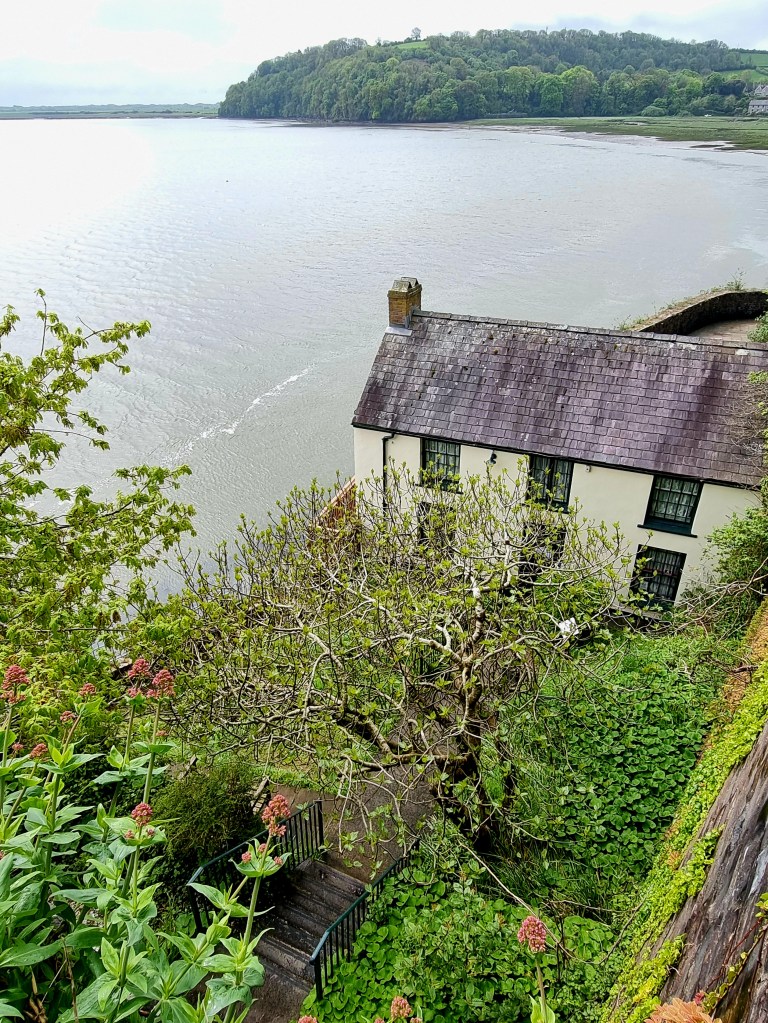
THE BOAT SHED
However, the standout in a photographic sense is the unmistakable Laugharne Castle, yet another ruin in another key scenic spot that is long past its use by date. Somehow its jagged walls with some remnant castellations, rising from a large mound by the waterline, are perfect eye candy and dominate the landscape as you’d expect from a true fortress.The
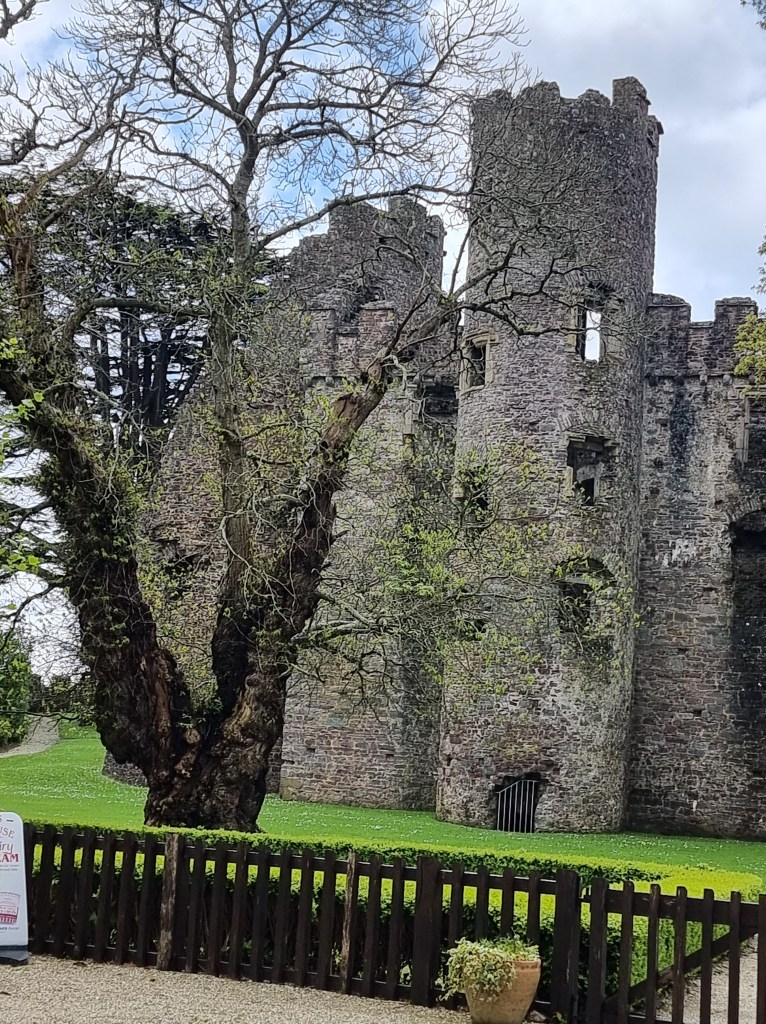
It all happened in Norman times. 1116 was when Robert Courtemain was recorded as trusting its care to Bleddyn ap Cedifor and, in 1171–1172, Henry II of England and Rhys ap Gruffudd agreed on a treaty of peace. When Henry II of England died in 1189 the castle, along with others, were seized by Rhys ap Gruffudd of Deheubarth in the same year. The castle may have been burnt at that time. It was rebuilt by the Normans and, in 1215, was captured by Llywelyn the Great in his campaign across South Wales. By 1247 Laugharne was granted to the De Brian family but, just ten years later, Guy de Brian was captured at Laugharne Castle by Llywelyn ap Gruffudd and the castle destroyed.
Flanked by vines, shrubbery, the occasional tree with the lush green sea grass of the tidal flats of Carmarthen Bay behind, it stands stark against the sombre background of indecisive clouds. Will it rain or nay? That is the ever present question for viewers of this area.
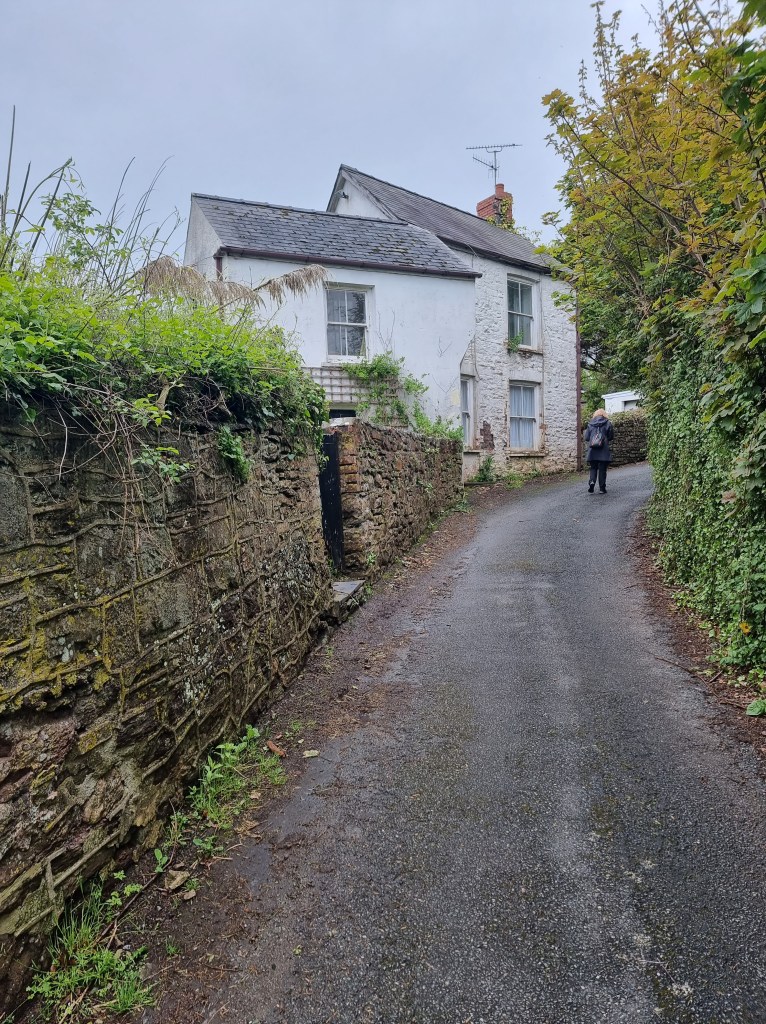
The path, frequented by Dylan on his way home from his favourite Browns Hotel, crosses the Taf, a twisting feeble excuse for a river but made lovely by an historic stone bridge. It’s all linked to the Coastal Walk of Wales and leads up towards Dylan Thomas’ garage, where much of his stuff was penned and where splendid views of the fluent Carmarthen Bay can be had as far as the eye can see.
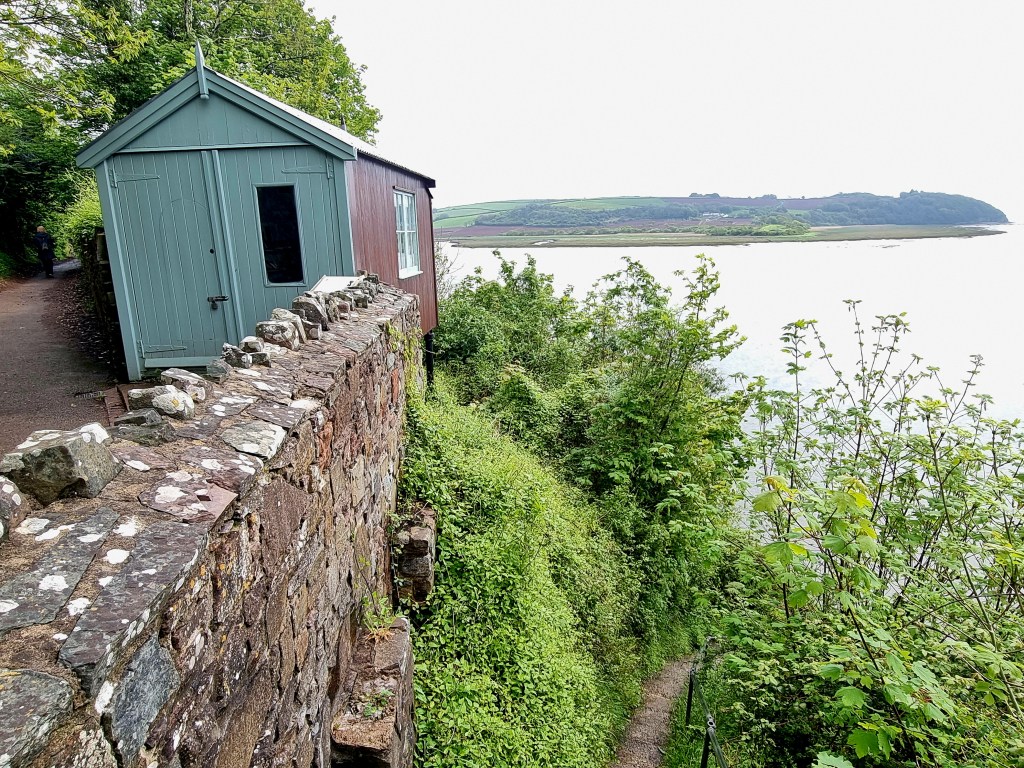
The Writing Shed
Passing by I could help not but pause and find inspiration by merely being here, understanding the rhythms of nature from this viewpoint and spying his desk and chair, still there after all those decades. Oh, that I had a key to unlock that door, a pen and paper to scribble upon and an hour to spare.
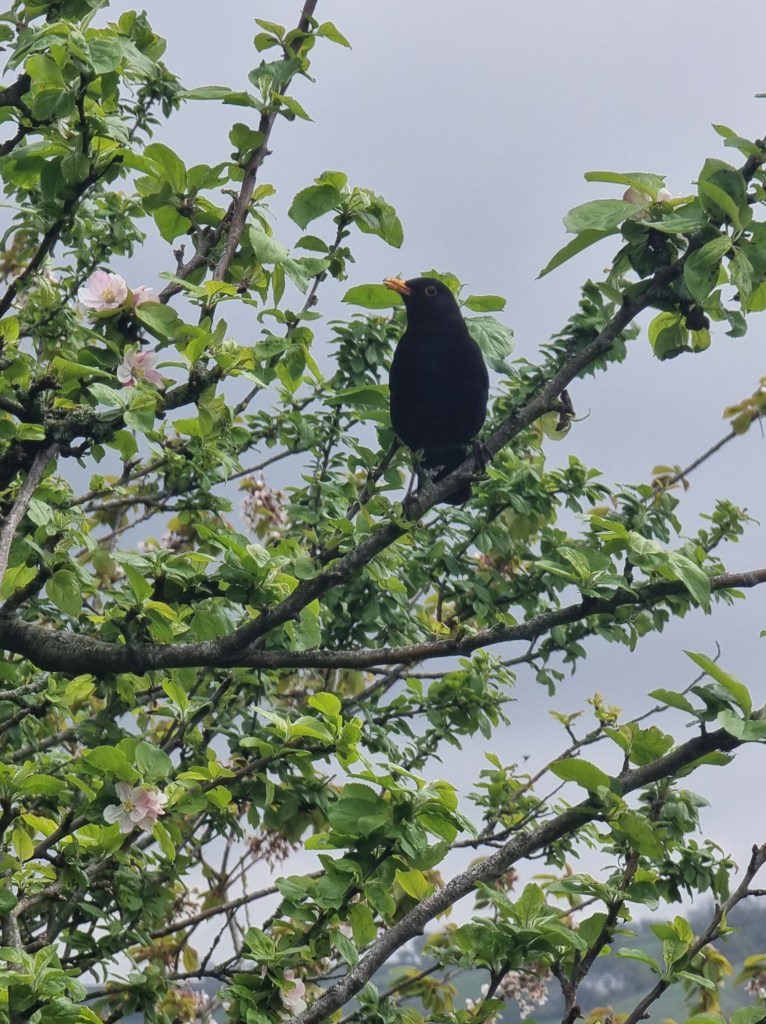
A blackbird seems to mock me walking by, hopping from branch to branch as if to get a better angle, eyeing me for what reason I know not. Dylan’s grave is on a narrow forest trail further up but we choose not to go because you are advised that it’s muddy and a slip and fall on a murky path is not what we need or seek. His famed boatshed is reached but it’s closed, as we’ve come to expect of many attractions, even though it’s spring and many are the walkers who would love a brief repast in this place.
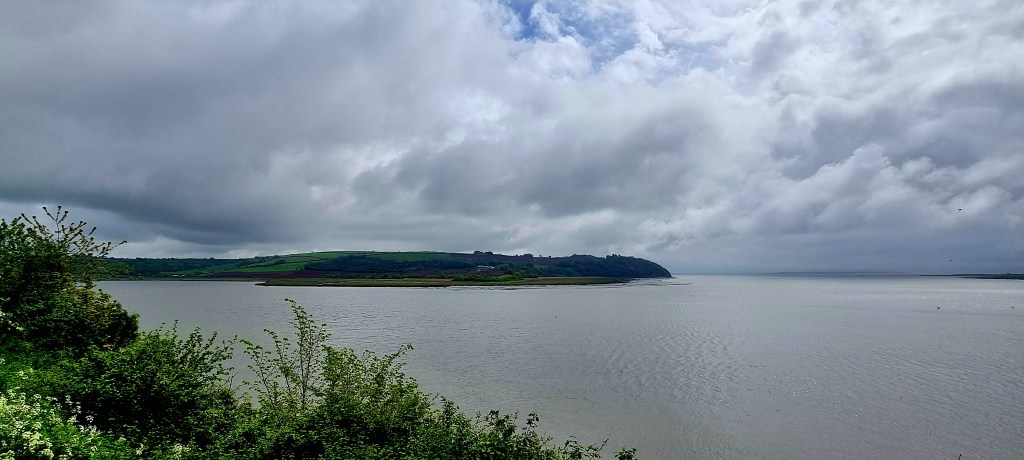
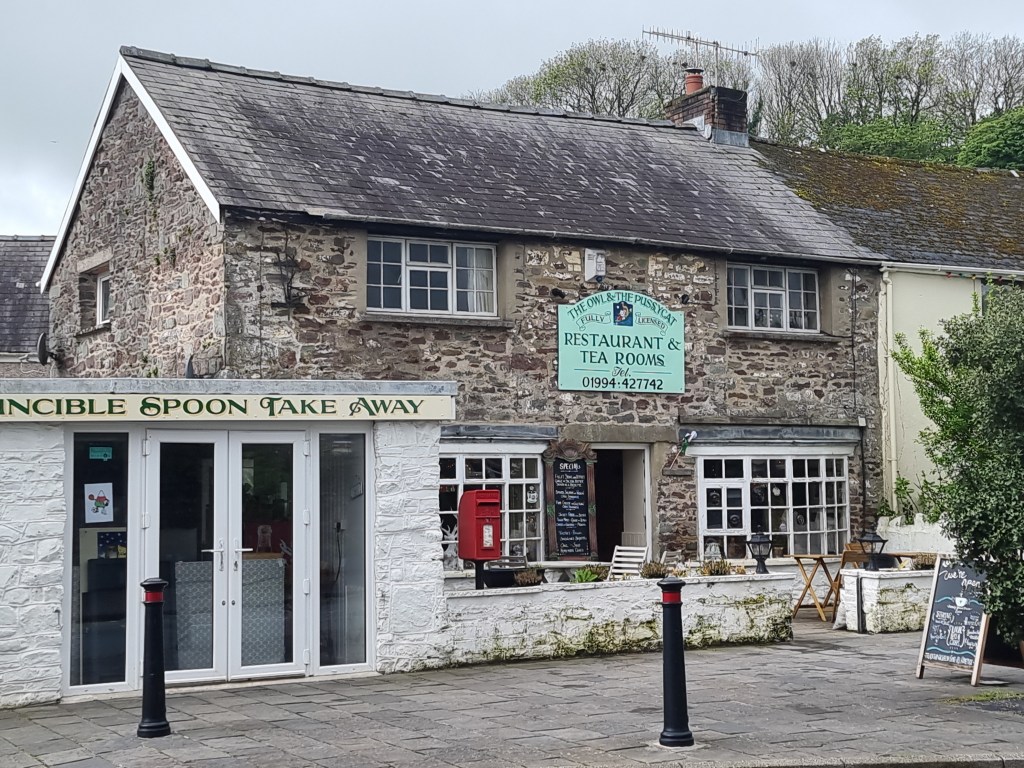
On the return, furtive glances across Carmarthen are obligatory. It’s the sort of place you literally don’t want to leave, but beckoning time is our master so we stroll back to what turns out to be a simply gorgeous tea room called the Owl and the Pussycat. Inside are cross stitch works of the highest quality, quirky notices and a lady who’s heard it all before and will stop you with cutting, though often humorous, remarks, reflecting her salty individuality.
The town has become more popular in recent times because a T.V. series called “Keeping Faith” was filmed here. Thus the modern tourist is surreptitiously drawn in to history of today’s times, but hopefully getting some rub off from yesteryear while they’re here. Surely they walk beneath milk woods still and ponder Dylan’s verse, “We are not wholly bad or good, who live our lives under milk wood.” Laugharne – I loved it!

 Taking You To Places You've Never Been