
Castle Rock
Ignoring the screams beside me; “You’re going the wrong way, turn right, turn right!” Deep inside I believed the direction we were heading was correct as we rolled into Lynton, aiming for a railway…only this is a special railway, so called.
It has two cars that pass each other on their 854ft route of 500ft altitude. Each has a 700 gallon tank that balances the weight of passengers and controls the clamps that serve as brakes. Water is released from the lower unit until it is lighter and thus is pulled down by the higher train. All this is further controlled by water-powered brakes.
All the water comes from the West Lyn River about a mile away and the discharge returns to the river. Can’t get much more environmentally sustainable than that!
And, yes, we were at the right place, as I discovered when I walked into a mechanics bay, not being able to find the local tourist information centre. “Just two streets down and turn right into the carpark”, I was reliably informed.
What was also handy was a café with a large skylight roof, just the ticket for chilly days in England we couldn’t help but think, as we savoured our hot broths before the big descent. Further en route we passed a makeshift van that sold ice creams….especially ones for dogs! Couldn’t help but reflect that they have a status here not enjoyed by the canines of Australia.

Finally, at the railway, so called, you couldn’t help but be entranced by the view down to Lynmouth and the headlands beyond. For some obscure reason, during my research, I thought the railway was the only way down which, not surprisingly, is far from the truth. A walking trail that crosses over the railway is available and a road comes in from the far side.
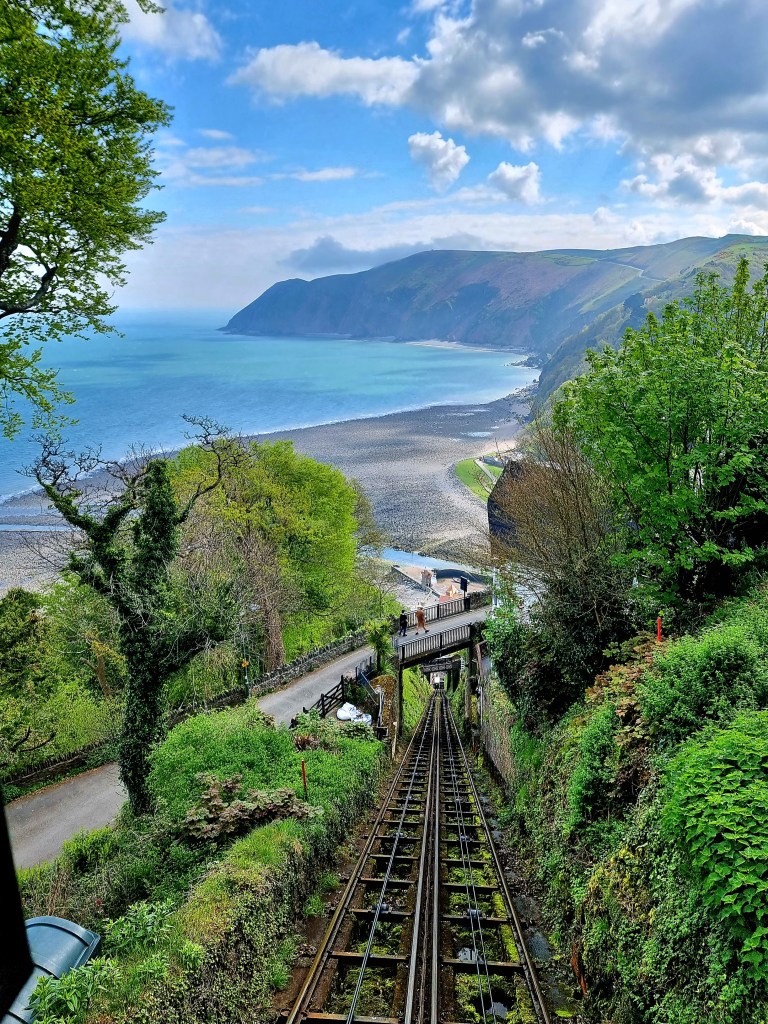
The distinctly green carriage that seats/stands about a dozen at a pinch is an odd affair. Seems like little has changed in the over 100 years that it’s been running. The brakes, that control the whole system, actually lift the carriage 2mm off the rails, none of which you’re aware of on your journey.

At the bottom Lynmouth, ever seeking to boost its tourist popularity for the last 150 years, seems to have succeeded admirably. With the main street bustling with cafes, tourist shops and the like we stroll in the fair weather beside the river which begat the name. Though the tide is noticeably out and the boats lie stranded, there’s still some water trickling by.

They are not always friendly waters however. In August 1954 the people here suffered the worst flood in English history. 34 died and 100 homes were swept away, like a falling stack of cards, in this unmatched catastrophe which is hard to imagine on a benign day such as this. We tarry awhile at the ice cream parlour and the old stone church, all the time rubber-necking the scenery.

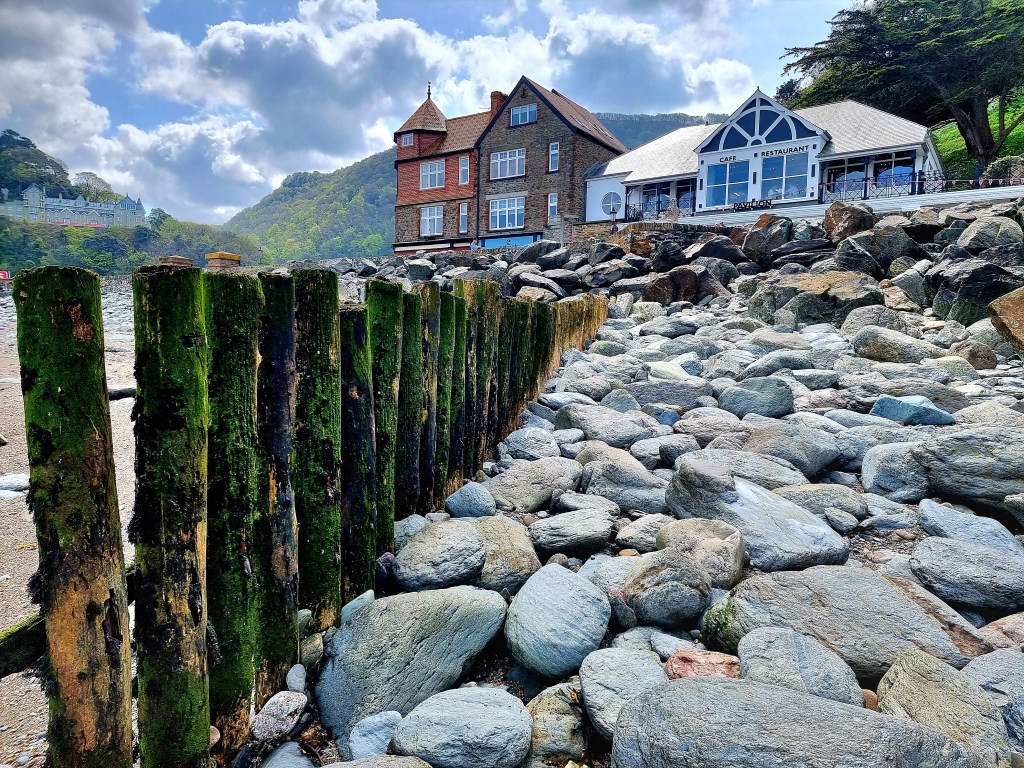
We also spend time on the beach, though not beach as we Aussies know it, no, more your pile of levelled rocks by the seaside riddled with debris like kelp and the crushed shells of a variety of molluscs. There’s also a few lines of mossy posts, whose purpose escapes me unless they were for boats delivering goods at high tide to the adjacent shops, something made redundant when delivery vans found their way here.
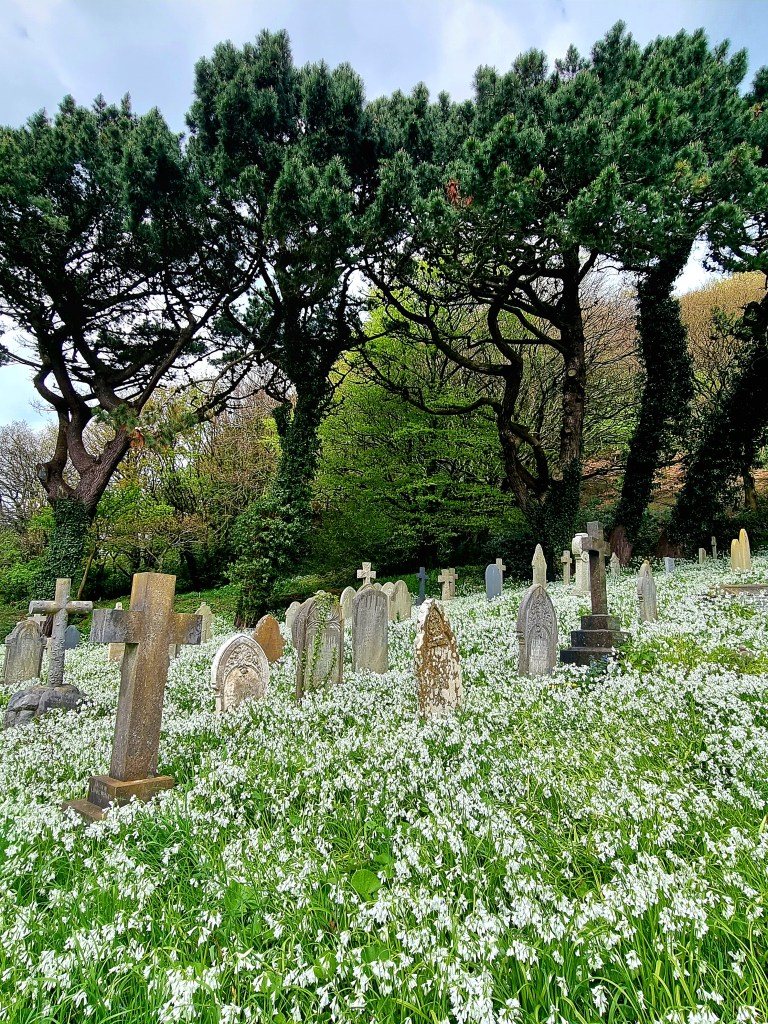
We head for the railway again, this time it’s packed both ways and, at the top, we seek directions off the driver to the Valley of Rocks. 15 minutes one way and 40 the other with a 45 degree slope we’re advised. With our aching legs it’s a no brainer so we set off down one of the main roads of Lynton but pause for a cemetery that’s awash, not only with old gravestones, but thousands of white bluebells. We’re later advised that is was mainly a special burial place for nuns.
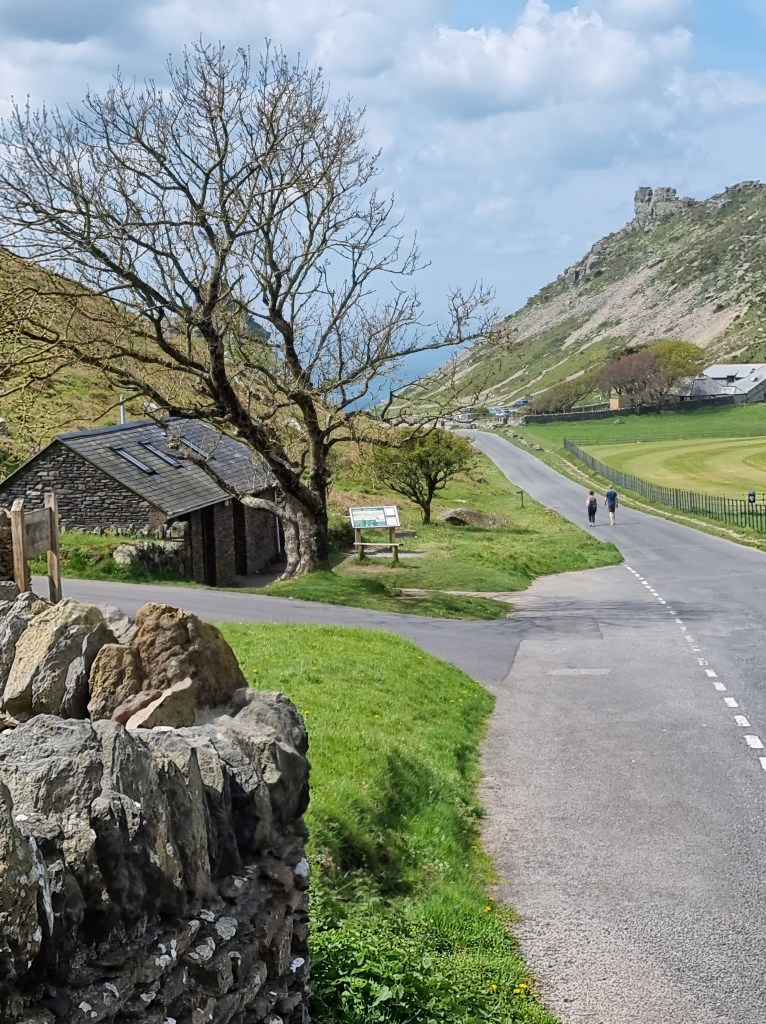
In time we reach the carpark, the first of three it turns out. Everything is in view but it all seems a long way away, even though it’s probably only a kilometre to what seems to be the main attraction, a jagged rock prominent on a hillside with the sea beyond. It’s only when you nearly reach it that the spectacular view and reason why people come here becomes apparent.
Castle Rock is a stunner, with the turquoise sea way below and a cloud line on the horizon, it has to be one of the best views in all Britain. Add a little gorse for the foreground and there’s your postcard for the trip.
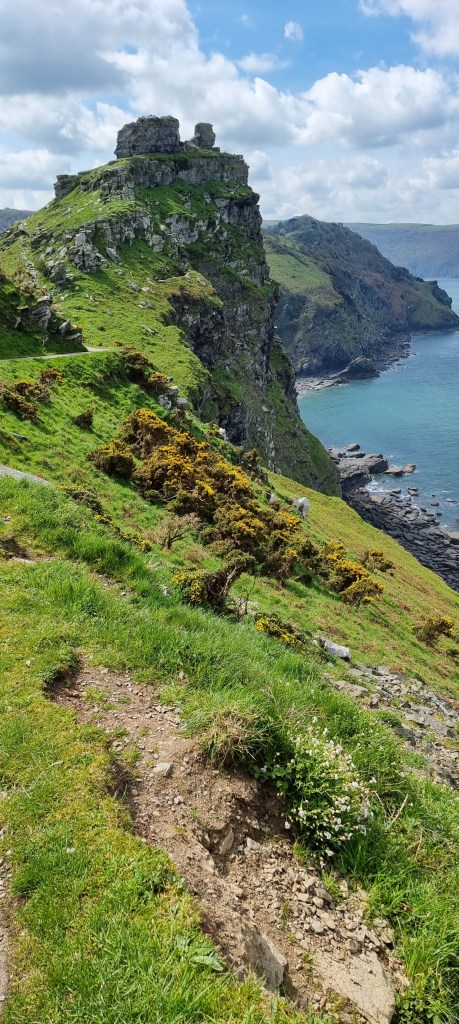
We stop and chat to some walkers. Armed with walking poles they’re obviously more into it than we are and they advise that it’s only half an hour back to the railway head along the cliff path. Lorraine suffers from vertigo somewhat so it was a challenge but she opted to give it a go, bearing in mind neither of us really wanted to walk back along the road. It was fortuitous, because, for Lorraine, it was the best walk she did on the trip.

There’s a gate some way along, just where the forest takes over from the sea, and from here it’s the Poems Walk Coastal Path, which I loved. They have billboards and anyone is welcome to pen something and fasten it to the board. Time didn’t permit to read all of them but I couldn’t help but wish there were more such walks. Someone in Australia get inspired!
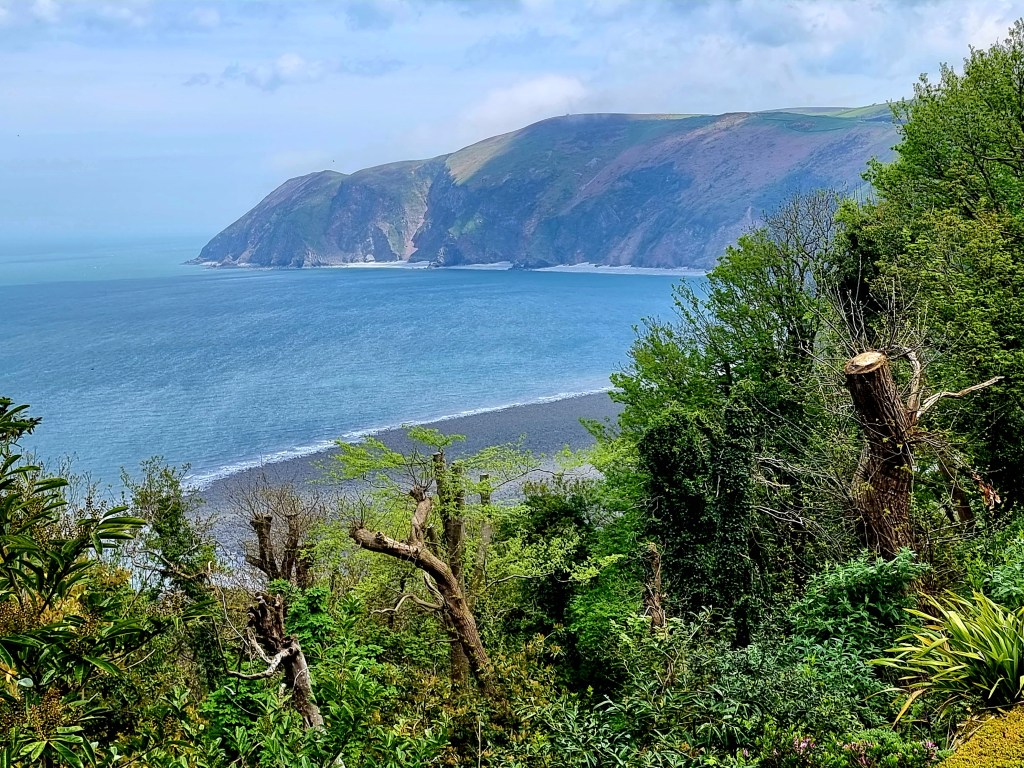
We returned with 10 minutes to spare on our four hour parking ticket. Exhausted and exhilarated at the same time, we both knew it had been a more than satisfactory day.
 Taking You To Places You've Never Been
Simply glorious countryside!
LikeLike